H955 - Broadway H955 - Broadway
Acoustic archtop - Sunburst
Production year(s) : 1940-1945 (other years possible, not verified)
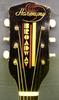
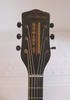
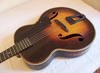
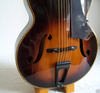
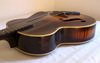
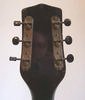
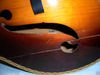
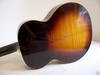
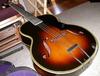
Early version of the H954 Broadway ? - All birch construction, top grained to ressemble spruce. "Auditorium" size, 8 dots neck. Checkered wood-block marquetry around body top. H955 had not yet the "Broadway" name in the 1940 catalog.
 35 images in database 35 images in database
mouse over image for file name - click to enlarge 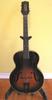
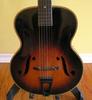
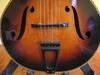




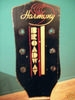


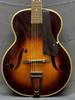
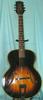
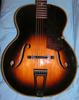
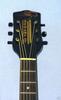
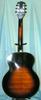
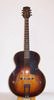
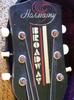
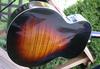



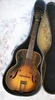

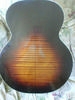
| Top wood | Birch
| | Body wood | Birch
| All solid woods
|
5 comments | Add your comment ! - Hank To Hendrix - 2005-12-07
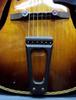
These guitars are made from a combination of wonderful woods! From the Brazilian Rosewood fingerboards/tail pieces to the rock maple back and sides. Many made during the wars years utilized this tail piece design(wood) and have no truss rods because of metal restriction needed for the war effort. The finish is an early version of "Photo Flame", tiger stripes air brushed often over "Birdseye maple" back and side sets! Wood bound "F" holes, tops and back. Today these often require neck sets, board dresses and refretting to bring them back to life, and are well worth restoring!!!!! - HARMONICAT - 2007-08-14
I guess I was wrong...I thought I had the earlier version of the B'WAy. But,upon further review...
i have the H955. It has a wooden tailpiece. Stamp inside says manufactuing date was F44.
Someone on this site said that metal tailpieces were not on the WW2-era Broadway's because of the War.
One reason why archtop acoustics were used so much in the radio days was because they reproduce mid-range frequencies better than flattops and in the radio of the '30's and 40's midrange was the frequency with the flattest response. archtop guitars were perfetly suited for the techno level of radio in the "days of yesteryear".
My Broadway was my main guitar for awhile-i had it next to my bed and for years i would play it-but it's sort of retired now-i have a Solera spanish nylon string that is my main player on my way to dream-land...the Broadway does not have a truss rod and the neck is bowed/warped slightly way down near the 10-12th frets.(which i never went to anyway).
great website Francois! - AArcher, from Georgia USA - 2008-03-19
I have just acquired a 1942 Broadway (1800H955 S-42), sans hardware, which I am trying to research to get back into playing condition; I had a beloved Harmony archtop when I was in highschool, and the "middle aged crazies" made me want one again.
What a beautiful guitar! Almost all of the wood marquetry is still intact, and what little is loosened is still present & repairable.
It was apparently manufactured early enough during the war that it was made with the metal fixed tailpiece, missing now but evident from the marks in the finish and the four screw holes.
It is also missing the endpin, which I assume was probably made from bone, to match the nut... I have not been able to find out information about that part.
It is obvious someone took care of this guitar. I plan to do the same... and will send a photo for your site once luthier Randy Wood has done his job, if you like. - david manion oalthe ks. - 2014-06-28
today i just traded some old fishing reals for a harmony broadway h955. the serial number is 4354 the date- number is f45.it is all in tact, 3 cracks in back of body.top good,sides good.binding on top some missing small sections.fret boardall intact ,2 small cracks between 1st and 4rth fret dots.also only has 4 dots on fret board, mabey rare.head stock and tuners all in tact as well as guitar finish.its beat up,but who knows what this guitar has been through.3 strings where still on guitar ,with ball ends.i didnt know how old guitar was until just now,im amazed.1945,wow ,oldest guitar ive ever had.i also have a hamony h180 in excelent shape.im 55 years old.when i started at 13 years old, harmonys were the guitars every where to start on in 1972. - will dean - 2019-11-02
Have a few GB Walters archtops. What info do you have?
|